
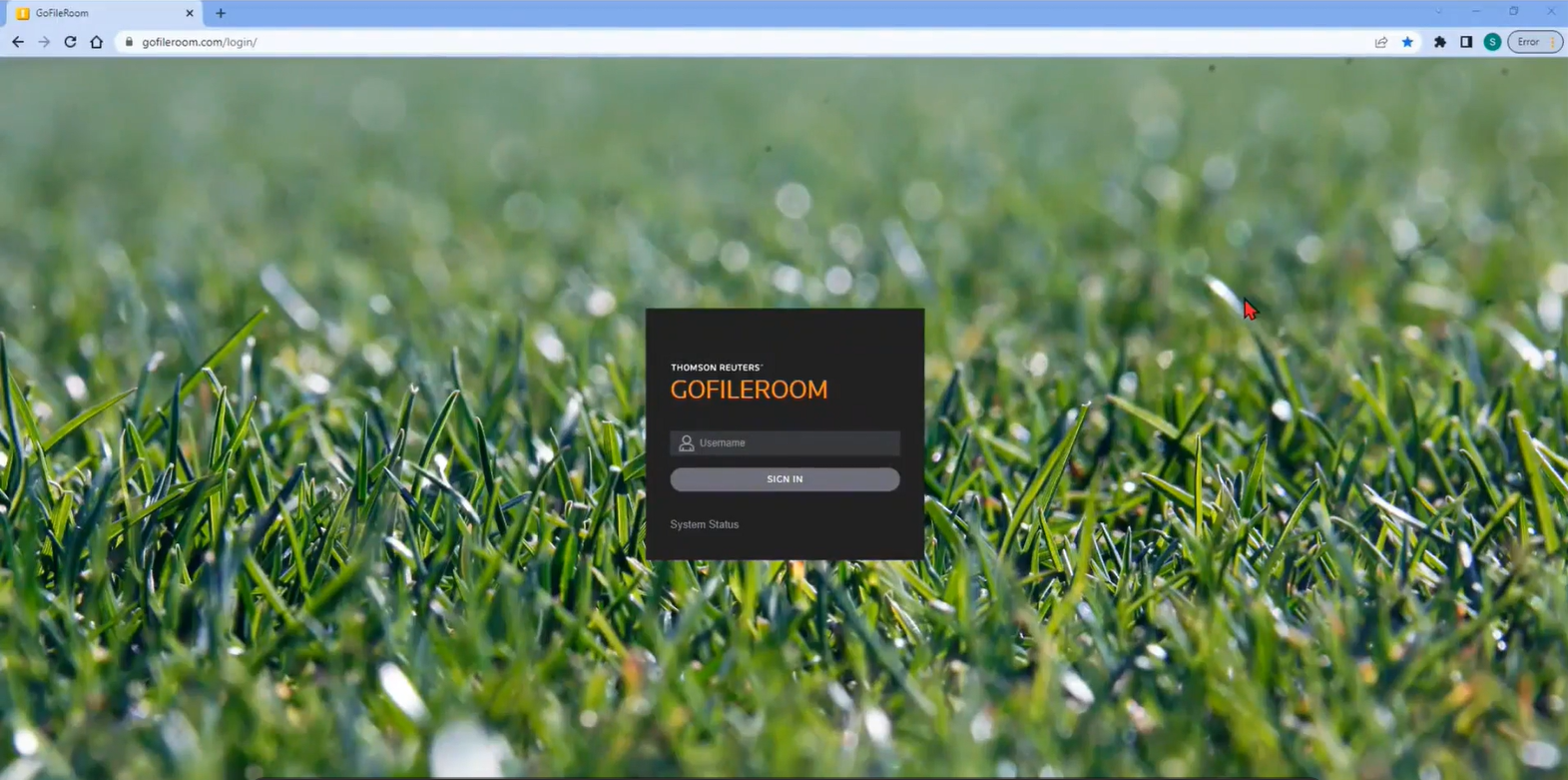
Gofileroom Explained: A Beginner’s Guide to Taming Your Document Chaos
Let me tell you a story about the “before times” in my small business. I used to think I was organized. I had a system. It was a system of chaos, but I defended it fiercely. My desktop was a mosaic of unnamed files like “Document1_final_v2_REALLYFINAL.pdf.” My email inbox was a black hole where client contracts went to die, only to be miraculously rediscovered weeks later after a frantic search. We had a shared server drive that was like a digital haunted house—you never knew what you were going to find in the dark corners, or if the file you needed had been accidentally deleted by someone else.
The breaking point came when I spent an entire afternoon looking for a signed service agreement. I combed through emails, thumb drives, and even a physical filing cabinet (yes, we still had one). Three hours later, I found it. In the “Downloads” folder of a colleague who was on vacation. That was three hours of billable time, client anxiety, and my own sanity, gone. I knew there had to be a better way. That’s when I discovered the world of document management software, and specifically, I began my journey with Gofileroom.
If any of this sounds familiar, you’re in the right place. This guide is for anyone who feels overwhelmed by digital paperwork. We’re going to walk through what Gofileroom is, what it does, and how it can fundamentally change the way you work for the better. I’ll speak in plain English, share my own experiences, and help you understand if it’s the right tool for you.
My Descent into Document Chaos (A Personal Story)
Before we dive into the solution, let’s commiserate on the problem. I ran a small marketing agency, and our document flow was a nightmare. We had:
-
Incoming Files from Clients: Briefs, logos, content, all via email.
-
Internal Files: Contracts, project plans, and creative assets living on individual hard drives.
-
Outgoing Files: Proposals, drafts, and final deliverables sent back via email or wetransfer.
The result? Catastrophic version control. I can’t tell you how many times we designed a brochure based on “Logo_v3.png,” only to have the client ask, “Why didn’t you use the updated logo I sent last week?” That updated logo was, of course, buried in an email thread with 47 other messages. We also had zero security. Sending a contract with sensitive payment terms as an email attachment felt like sending a postcard through the mail—anyone could read it. And the time wasted? We were probably losing 10-15 hours a week across the team just on “document hunting.”
This isn’t just my story. It’s the story of countless small to medium-sized businesses, legal firms, accounting practices, and non-profits. We grow organically, and our document management system doesn’t grow with us. It plateaus, and then it breaks. Gofileroom was the fix I needed, but to understand why, we first need to be clear on what it actually is.
What is Gofileroom, Really? No Jargon, Just Clarity.
If you look up Gofileroom, you’ll see phrases like “cloud-based document management solution” and “workflow automation platform.” That’s all accurate, but let’s break that down into something much simpler.
Think of Gofileroom as your company’s digital brain and central nervous system for all documents.
Instead of your files being scattered across desks, computers, email inboxes, and cloud storage apps, Gofileroom brings them all into one secure, online location. But it’s so much more than just cloud storage like Google Drive or Dropbox. While those tools are great for storing files, Gofileroom is built for managing them. It understands the context of your documents.
Here’s the core difference: In Google Drive, you have a file called “Contract_ABCCompany.docx.” In Gofileroom, you have that same file, but the system also knows:
-
Who the client is (it’s linked to their record).
-
That it’s a contract (a specific type of document).
-
Who needs to approve it next (the workflow).
-
When it was signed and by whom (the audit trail).
-
Who is allowed to see it and who isn’t (the permissions).
It adds a layer of intelligence and process to your files. It’s the difference between having a pile of papers on your floor and having a sophisticated filing cabinet where every document has a designated, logical home and a set of rules for how it should be handled.
The 4 Biggest Problems Gofileroom Solves for Businesses Like Yours
Based on my experience and talking to others, Gofileroom directly addresses a handful of critical, universal business pains.
1. The “Where Is That File?” Nightmare:
This is the most obvious one. Lost files cost time, money, and client trust. Gofileroom solves this with powerful search and organization. You don’t just search by filename; you can search by client name, document type, date, or even words inside the document (thanks to OCR, or Optical Character Recognition, which makes text within scanned PDFs searchable). I remember the first time I found a client’s insurance certificate in seconds by searching for their policy number instead of a vague filename. It felt like magic.
2. The Version Control Confusion:
“Final_v1,” “Final_v2_Edits,” “Final_ForRealThisTime”… sound familiar? Gofileroom maintains a single version of the truth. When a document is checked out for editing, it’s locked to prevent others from making conflicting changes. Every time a new version is saved, the old one is retained in a history log. You can always see who changed what and when, and you can revert to a previous version if someone makes a mistake. This alone eliminated about 90% of the internal confusion on our projects.
3. The Security and Compliance Anxiety:
Emailing sensitive documents is inherently risky. Are you sure the right person is the only one who will see it? Gofileroom provides a secure vault. You can set granular permissions, meaning you can control exactly which users or groups can view, edit, or delete a specific document or folder. For industries like healthcare or finance, this is non-negotiable. Features like audit trails—a detailed log of every action taken on a document—are essential for compliance with regulations like HIPAA or SOC 2.
4. The Inefficient, Paper-Based Workflow:
The process of printing a document, getting it signed, scanning it, and emailing it is a relic of the past. It’s slow and prone to error. Gofileroom’s workflow automation allows you to design digital pathways for your documents. For example, an invoice can be automatically routed from the accounts payable person, to the manager for approval, and then to the CFO for final sign-off. Everyone gets a notification, and you can see the invoice’s status in real-time without sending a single email or walking a piece of paper to someone’s desk.
A Friendly Tour of Gofileroom’s Key Features
Now that we know the problems it solves, let’s look at the tools in the toolbox. Here are some of the standout features that make it all possible.
The Centralized Repository:
This is the heart of Gofileroom. It’s the single, secure cloud where all your documents live. You can organize them in a familiar folder structure, but with much more powerful tagging and categorization. Imagine having one search bar that can find anything, from any department, in seconds.
Robust Access Controls and Security:
You are in complete control. You can create user groups (e.g., “Managers,” “Accountants,” “Clients”) and set permissions at a very detailed level. Maybe the marketing team can see marketing materials but not financial reports. Maybe a client can only see the files in their own dedicated client portal. Everything is encrypted, and you have a full audit trail for complete peace of mind.
Document Workflow Automation:
This is where Gofileroom moves from being a filing cabinet to being an active productivity engine. You can create custom workflows for your recurring processes. Let’s take the example of a new employee onboarding. You can create a workflow that automatically:
-
Assigns the HR manager to upload the signed offer letter.
-
Then notifies the IT manager to set up a laptop and accounts.
-
Then routes the equipment request form to the department head for approval.
-
Finally, alerts the new employee that their first-day schedule is ready.
This ensures nothing falls through the cracks and everyone knows what to do next.
Seamless Integration and Collaboration:
Gofileroom isn’t meant to be an isolated island. It often integrates with the tools you already use, like your accounting software (QuickBooks, Xero), your CRM (Salesforce), or Microsoft Office. This means you can save documents directly from Word or Excel into Gofileroom, or access client files directly from their record in your CRM. Collaboration features like annotations, comments, and notifications make working on documents together a smooth, coherent process instead of a messy email chain.
How to Actually Use Gofileroom in Your Daily Work (With Simple Examples)
Theory is great, but how does this look on a Tuesday morning? Let’s walk through a few scenarios.
Scenario 1: Processing a New Vendor Invoice
-
The Old Way: The invoice arrives as a PDF attachment in the accounts@yourcompany.com inbox. The bookkeeper downloads it, saves it to a folder called “Invoices_Pending,” and then emails the department head to ask for approval. The department head forgets, the bookkeeper sends a follow-up, and finally, after a few days, the approved invoice is paid and filed away in another folder called “Invoices_Paid.” It’s a clunky, manual process.
-
The Gofileroom Way: The invoice is emailed to a dedicated Gofileroom upload address, automatically creating a new document in the “Vendor Invoices” workspace. A pre-built workflow triggers instantly. It automatically assigns the task to the relevant department head for approval. The department head gets a notification in Gofileroom and on their email. They click a link, review the invoice, and click “Approve.” The workflow then moves the document to the “Approved Invoices” folder and notifies the bookkeeper that it’s ready for payment. The entire process is tracked, timestamped, and effortless.
Scenario 2: Collaborating on a Sales Proposal
-
The Old Way: You create a draft proposal and email it to your sales director and a technical expert for feedback. They both reply-all with their comments and attached versions of the document with tracked changes. You now have three different versions of the truth and the tedious job of merging them all into one final document.
-
The Gofileroom Way: You create the proposal directly in Gofileroom. You share it with the sales director and technical expert, giving them permission to comment. They both log in and add their comments and suggestions directly onto the same document, in the same place. You can see their feedback side-by-side and address each point. Once done, you simply update the document to its final version—the history of all comments and changes is preserved forever in the audit trail.
Is Gofileroom Right for You? A Honest Look at Who Benefits Most
Gofileroom is a powerful tool, but it’s not a one-size-fits-all magic wand. It provides the most value to specific types of organizations and users.
Who Benefits the Most?
-
Small to Medium-Sized Businesses (SMBs) drowning in operational paperwork. If you’re spending more time managing documents than doing the work they represent, you are the perfect candidate.
-
Industries with heavy compliance needs: Legal firms, accounting practices, healthcare organizations, and financial advisors. The security, audit trails, and permission controls are worth their weight in gold for meeting regulatory standards.
-
Project-Based Businesses: Marketing agencies, construction companies, consultants. The ability to keep all project-related documents—contracts, plans, deliverables, communications—in one client-specific location is a game-changer for efficiency and client service.
-
Any company with remote or hybrid teams. Gofileroom acts as the central hub, ensuring everyone has access to the files they need, no matter where they are, without the security risks of USB drives or personal email accounts.
Who Might Not Need It?
A solo entrepreneur who only deals with a handful of simple documents a month might find the cost and learning curve of a full-fledged DMS like Gofileroom to be overkill. They might be perfectly served by a well-organized cloud storage service. However, the moment you hire your first employee or start dealing with complex, multi-step processes, the equation changes dramatically.
Conclusion: Taking the First Step Towards a Calmer, More Organized Business
Looking back, implementing Gofileroom was one of the best decisions I made for my business. It wasn’t just about software; it was about adopting a new, more intelligent way of working. The relief of knowing where every document was, the confidence of having an unbreakable audit trail, and the sheer time saved by automating tedious workflows gave us our most valuable resource back: our focus.
We could stop being professional file clerks and start being the marketers, accountants, or managers we were hired to be. The initial chaos of my office seems like a distant memory now, a cautionary tale from a less efficient era.
If you see your own struggles reflected in this article, I encourage you to take the first step. Most providers, including Gofileroom, offer demos or free trials. You don’t have to make a full commitment right away. Just take a look. See how it feels to have a document management system that works for you, instead of you working for it. Taming your document chaos is not just a technical upgrade; it’s a strategic move towards a more productive, secure, and ultimately, more successful business.
Frequently Asked Questions (FAQ) About Gofileroom
Q1: Is Gofileroom secure? How does it protect my data?
Yes, security is a foundational principle of Gofileroom. It employs enterprise-grade security measures including data encryption both in transit and at rest (meaning when it’s being sent and when it’s stored), robust user authentication, and detailed permission controls. Furthermore, the comprehensive audit trail provides a record of every action, which is crucial for security monitoring and compliance.
Q2: Can Gofileroom integrate with the other software we use, like QuickBooks or Salesforce?
In most cases, yes. Gofileroom typically offers a range of integrations with popular business software, including accounting platforms like QuickBooks and Xero, CRM systems like Salesforce, and Microsoft Office suite. It’s best to check their official website or speak with a sales representative to confirm integration with your specific stack.
Q3: We are a very small team. Is Gofileroom too big and complex for us?
Not necessarily. While Gofileroom is powerful enough for large enterprises, its design often emphasizes user-friendliness. The goal is to simplify your work, not complicate it. Many small teams find that starting with the core features—centralized storage, secure sharing, and basic permissions—delivers immediate value. You can then gradually adopt more advanced features like workflow automation as your needs grow.
Q4: What kind of support and training does Gofileroom offer?
This can vary, but most reputable document management providers offer a range of support options. This often includes online knowledge bases, video tutorials, webinars, and responsive customer support via email or phone. During implementation, they may provide more hands-on training to ensure your team is set up for success.
Q5: How is Gofileroom different from using something like Google Drive or SharePoint?
Google Drive and SharePoint are excellent collaboration and storage tools. However, Gofileroom is a dedicated Document Management System (DMS). The key difference is in depth of management and process control. A DMS like Gofileroom is built specifically for enforcing document retention policies, managing complex approval workflows, providing robust audit trails for compliance, and offering more granular security permissions. It’s the difference between a shared folder and a smart, automated, policy-driven document control center.
