
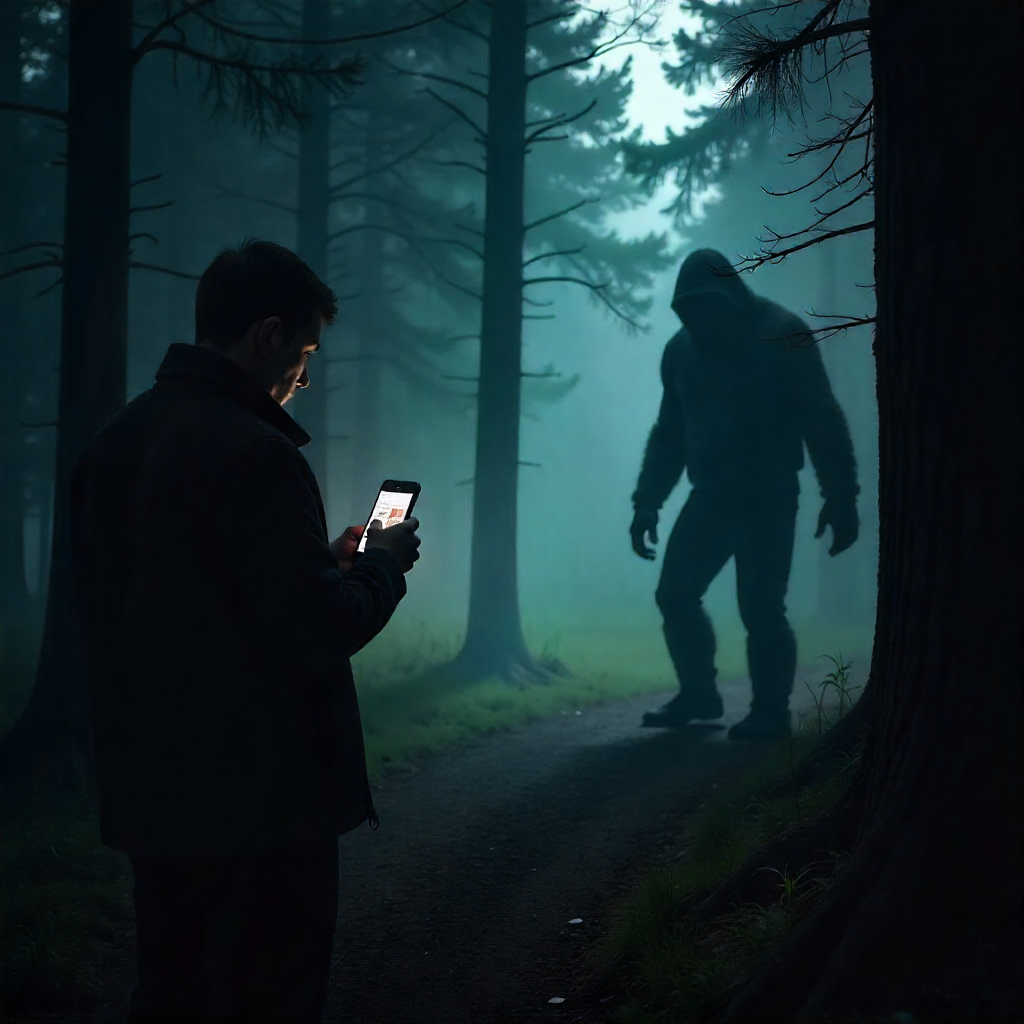
It was a crisp autumn evening, years ago, camping with friends in the dense woods of the Pacific Northwest. The fire was crackling, and the conversation, as it often does in such settings, turned to the local legend: Bigfoot. We shared stories, our voices hushed, our eyes darting towards the impenetrable wall of darkness beyond our campfire. For a moment, suspended in that shared sense of wonder, it was easy to believe. What if? What if there really was a massive, undiscovered primate walking these ancient forests?
That sense of mystery is powerful. It’s the same feeling that drives thousands of people to watch documentaries, join online forums, and even trek into the wilderness hoping to catch a glimpse of the elusive Sasquatch. I get it. The idea of a hidden world, of a mystery yet to be solved, is incredibly appealing. It taps into something deep within us—a longing for adventure and the unknown.
But after years of looking into this phenomenon, not as a hunter, but as someone fascinated by human belief itself, I’ve come to a more cautious conclusion. While the idea of Bigfoot is mostly harmless fun, the fervent belief in it can lead to a surprising number of real-world risks and harms. This isn’t about mocking anyone’s beliefs. It’s about taking a clear-eyed look at the consequences, both personal and societal, that can stem from dedicating significant time, money, and emotion to the pursuit of a creature for which there is still no conclusive scientific evidence.
This article will explore the darker side of the Bigfoot legend. We’ll talk about the tangible costs, the psychological pressures, the physical dangers, and the wider impact on science and public trust. My goal is not to shatter anyone’s sense of wonder, but to advocate for a balanced, responsible approach to this enduring mystery.
The High Price of the Hunt: Financial Risks of Chasing Bigfoot
Let’s start with the most concrete risk: money. The belief in Bigfoot isn’t just a passive idea you hold in your head; for many, it’s an active and expensive hobby, and for a few, it becomes an all-consuming obsession. The financial drain can be substantial and, in some cases, life-altering.
Think about what a serious Bigfoot expedition requires. You don’t just wander into the woods with a backpack. Enthusiasts invest thousands of dollars in high-tech gear. We’re talking about professional-grade trail cameras that can cost hundreds of dollars each, and people often deploy dozens of them. They buy thermal imaging scopes and night-vision goggles, which can easily run into the thousands, even tens of thousands, of dollars. There are high-frequency audio recorders to capture supposed Sasquatch vocalizations, and drones to scout inaccessible areas.
Then, there are the recurring costs. Travel expenses for repeated trips to “hotspot” areas like the forests of Washington, Oregon, or the Appalachians add up quickly. You have fuel, vehicle maintenance for rough terrain, accommodation, and food. For those who take it to the extreme, this isn’t a once-a-year vacation; it’s a regular weekend commitment. I’ve read forum posts from individuals who openly admit to spending a significant portion of their disposable income on their search, sometimes to the concern of their families.
The most heartbreaking stories involve people who have poured their life savings into the hunt. There was a case I recall reading about where a man, convinced he was on the verge of a discovery, took out a second mortgage on his home to fund a large-scale, months-long expedition. When he returned empty-handed, he was not only financially ruined but also faced the collapse of his marriage. The emotional toll of that financial loss is immeasurable.
Furthermore, the Bigfoot industry itself preys on this fervent belief. There’s a whole economy selling everything from plaster cast kits for footprints to “Sasquatch calls.” While there’s nothing wrong with a free market, it becomes ethically murky when the products are sold with the implicit promise of proving the existence of something that has eluded science for centuries. The financial risk isn’t just in the direct search; it’s in the constant investment in tools and trinkets that promise a breakthrough that never seems to come.
“I Thought I Saw Him”: The Psychological Toll of Belief
Beyond the financial cost, the psychological impact of a deep-seated belief in Bigfoot can be profound. The human mind is a powerful pattern-recognition machine, but it’s also prone to errors, especially when we’re emotionally invested in a particular outcome. This is where concepts like confirmation bias and pareidolia come into play.
Confirmation bias is our tendency to interpret new information in a way that confirms our pre-existing beliefs. For a Bigfoot believer, every broken branch, every strange sound in the night, and every blurry photograph is filtered through the lens of “This could be it!” They actively seek out and overweight evidence that supports their belief, while simultaneously dismissing or explaining away the vast majority of evidence that points to more mundane explanations—a bear, a falling tree, a hiker, or a hoax.
I once spoke to a very sincere man who was convinced a Bigfoot was visiting his property. He showed me audio recordings of what sounded like deep whoops and screams. To him, it was undeniable proof. However, when I played the recording for a biologist friend, he immediately identified it as the calls of a fox during its mating season. The believer was disappointed and dismissive; his mind had already made its conclusion. This constant reinforcement of a belief system, despite contradictory evidence, can create a kind of intellectual isolation.
Then there’s the paranoia and sleep deprivation. Many dedicated Bigfoot seekers spend nights alone in the woods, often in a state of heightened alertness. Every rustle of leaves is a potential sign. This sustained state of fear and anticipation is exhausting. It can lead to chronic anxiety and, in some documented cases, even trigger or exacerbate mental health conditions. The mind, deprived of sleep and fueled by adrenaline, can begin to play tricks. Shadows morph into figures; the wind sounds like whispering. It’s a feedback loop: the belief makes you scared and vigilant, and the fear and vigilance make you more likely to perceive threats that aren’t there.
This obsession can also put a severe strain on personal relationships. When a significant portion of your free time, finances, and mental energy is dedicated to the hunt, your partner, children, and friends can feel neglected. I’ve read countless testimonials on online forums from spouses who feel they’ve become “Bigfoot widows,” their partners more committed to a phantom in the forest than to their own family. The social cost of this belief is a quiet, often unspoken, harm that can fracture homes.
Lost in the Woods: The Real Physical Dangers of the Search
Perhaps the most immediate and tangible risks are the physical dangers inherent in searching for Bigfoot. The very nature of the pursuit leads people into remote, rugged, and often treacherous environments. In the quest for a creature that avoids humanity, seekers must go where few people tread, and that comes with significant peril.
The wilderness is unforgiving. Every year, search and rescue teams are deployed to find missing hikers and hunters. Bigfoot seekers are no exception; in fact, they might be at a higher risk. Driven by the possibility of a discovery, they might push deeper into the woods than is safe, ignore changing weather conditions, or take risks they otherwise wouldn’t. There are documented cases of individuals suffering from hypothermia, falls from ridges, and injuries from animal encounters while on a “Sasquatch hunt.”
I remember a story from a park ranger who told me about a group of Bigfoot enthusiasts who ventured off-trail in a state park, armed with their gear and a vague map of “sightings.” They became disoriented and lost, and it took a two-day search operation to find them, cold, hungry, and dehydrated. They were lucky. The ranger noted, with a tone of frustration, that these kinds of preventable incidents drain public resources and put the rescue teams themselves in danger.
The danger isn’t just from the environment. The belief in a large, powerful, and potentially aggressive unknown primate can lead to dangerous situations. Some believers arm themselves, convinced they need protection from a seven-foot-tall, 500-pound creature. This introduces the risk of accidental discharge or, in a panicked moment, misidentifying a person or a common animal as a threat. Imagine two armed groups of Bigfoot hunters stalking each other in the dim light of dusk, each convinced the other is the monster they seek. The potential for tragedy is very real.
This obsessive focus on a single, unproven goal can cause people to overlook the very real and present dangers of the wild, such as bears, mountain lions, moose, or simply the risk of a twisted ankle miles from the nearest road. The phantom Bigfoot becomes the sole focus, blinding seekers to the authentic hazards at their feet.
Crying Wolf: How Bigfoot Hoaxes Erode Public Trust
The world of Bigfoot is unfortunately riddled with hoaxes. From the famous 1967 Patterson-Gimlin film, which is still hotly debated, to the countless confessed fakes like the “Georgia Bigfoot” body suit hoax of 2008, deception is a central part of the story. While a prank might seem harmless, the cumulative effect of these hoaxes is deeply damaging.
First, they waste public resources. When someone reports a credible-sounding Bigfoot sighting to local law enforcement or a park authority, they are often legally obligated to investigate. This means sending out sheriff’s deputies, forest rangers, or search and rescue teams. These investigations cost taxpayer money and take valuable personnel away from genuine emergencies. Every time a hoax is perpetrated, it’s not just a joke on the “gullible”; it’s a theft of public time and funds.
More insidiously, hoaxes erode the very foundation of trust. When a new piece of “evidence” emerges, the public, and even sincere believers, become increasingly skeptical. This creates a “boy who cried wolf” scenario. If, by some astronomical chance, a real, unprecedented animal were discovered one day, the initial public and scientific reaction would likely be one of dismissive laughter, assuming it’s just another hoax. The hoaxers, in their quest for attention, actively poison the well for any potential future discovery.
I once met a man at a conference who had dedicated decades of his life to Bigfoot research. He was a sincere, methodical individual. The pain in his voice was palpable when he talked about hoaxes. “They set back legitimate inquiry by decades,” he told me. “They make a mockery of the people who are genuinely trying to approach this mystery with integrity.” For every person honestly trying to document strange occurrences, there are several others ready to fabricate evidence for fame or profit, tarring everyone in the field with the same brush.
This erosion of trust extends beyond Bigfoot. It feeds a broader cultural cynicism and makes it harder for people to distinguish between legitimate mystery and outright fabrication. In an age of misinformation, the Bigfoot hoax is a classic case study in how easily truth can be manipulated and how difficult it becomes to rebuild trust once it’s broken.
A Distraction from Real Science: Cryptozoology vs. Biology
One of the most significant intellectual harms of the Bigfoot phenomenon is its misdirection of scientific curiosity and resources. Cryptozoology, the “study of hidden animals,” often operates on the fringes of science, but its popularity can sometimes overshadow the truly amazing discoveries happening in real biology and conservation.
The central scientific problem with Bigfoot is the complete lack of any verifiable physical evidence, what scientists call a “voucher specimen.” For a species to be confirmed, we need a body, a skeleton, or at the very least, definitive DNA evidence from a non-contaminated sample. Despite thousands of reported sightings and countless hair samples submitted for analysis, the results are always the same: the hair belongs to a known animal like a bear, bison, or cow. Not a single piece of evidence has passed rigorous scientific scrutiny.
When people pour their intellectual energy into trying to prove Bigfoot’s existence, they are often not applying the rigorous methods of science. They start with the conclusion (“Bigfoot is real”) and then look for evidence to fit it, which is the opposite of the scientific method. This approach hinders critical thinking skills. Instead of learning about the complex, evidence-based methods used by wildlife biologists to track and study elusive known species—like the use of camera traps for snow leopards or fecal DNA analysis for gorillas—the focus shifts to interpreting blurry photos and anecdotal stories.
Furthermore, the obsession with a single, mythical creature can blind us to the wonders and pressing conservation needs of the real creatures in those same habitats. The old-growth forests of the Pacific Northwest are home to critically endangered species like the Northern Spotted Owl and the Marbled Murrelet. These ecosystems are facing real threats from logging, climate change, and development. The effort and funding channeled into finding Bigfoot would be far better spent, and would yield actual, tangible results, if directed toward protecting the biodiversity we know exists and is under threat.
By focusing on a phantom, we risk neglecting the tangible, fragile, and utterly fascinating natural world right in front of us. The real magic isn’t in a mythical ape-man; it’s in the intricate web of life that we are still working to understand and protect.
Finding a Balance: Can We Enjoy the Legend Safely?
After outlining all these risks and harms, it would be easy to conclude that the Bigfoot legend is purely negative. But that wouldn’t be entirely fair or accurate. The human spirit craves mystery and stories. Bigfoot, as a modern myth, serves a purpose. It gets people interested in the outdoors, it fosters a sense of community among enthusiasts, and it sparks the imagination. The key is to find a way to enjoy the legend without falling prey to its potential downsides.
So, how can we do that?
First, we can embrace the legend as a piece of folklore and cultural storytelling. There’s immense value in the stories themselves, in the campfire tales, and in the movies. We can appreciate Bigfoot as a symbol of the wild, a reminder of the vast, unexplored corners of our world that still hold secrets. This approach allows for enjoyment without the necessity of literal belief.
Second, we can use the interest in Bigfoot as a stepping stone to learning about real science and nature. If you’re fascinated by the idea of a large primate in the forests of North America, why not learn about the primates we know exist? Study the social structures of chimpanzees, the intelligence of orangutans, or the biology of bears, which are the animals most often mistaken for Bigfoot. Redirect that curiosity toward the tangible and the proven. Go for a hike not to find Sasquatch, but to identify bird calls, track animal prints you can actually recognize, and appreciate the ecosystem as a whole.
Finally, we must champion critical thinking. This doesn’t mean being a cynical killjoy. It means asking good questions. Who is the source of this information? What is their evidence? What are the more likely, mundane explanations? Is this claim testable and falsifiable? Applying these simple filters can protect you from financial scams, psychological stress, and physical danger.
We don’t have to kill the mystery to be safe and rational. We can hold the wonder of “what if” in one hand, and the clear-eyed tools of critical thinking in the other. We can enjoy the hunt for the thrill of being in nature, not for the expectation of finding a monster. The greatest discovery in the woods doesn’t have to be Bigfoot; it can be a newfound respect for the real, complex, and beautiful world we inhabit.
Conclusion
Believing in Bigfoot seems, on the surface, like a harmless bit of fun. But as we’ve seen, when that belief becomes deeply held and actively pursued, it can lead to a cascade of negative consequences. The financial costs can be crippling, the psychological toll can lead to anxiety and strained relationships, and the physical dangers of the search are very real. On a broader scale, the constant stream of hoaxes erodes public trust and wastes valuable resources, while the focus on a cryptid distracts from the urgent and evidence-based work of real science and conservation.
The allure of the unknown is powerful, and the Bigfoot legend will undoubtedly continue to captivate us for generations to come. However, by approaching it with a sense of balance, a dose of skepticism, and a primary focus on the authentic wonders of the natural world, we can safeguard ourselves from the harms. We can enjoy the story for what it is—a great story—while keeping our feet firmly planted in the real, and often more incredible, world around us. The true secret of the forest isn’t a hidden giant; it’s the resilience of the ecosystem and the importance of our own clear-sighted stewardship of it.
Frequently Asked Questions (FAQ)
Q1: Isn’t it harmless fun to believe in Bigfoot?
For many people, it is. Enjoying the stories, watching movies, and casually wondering “what if” is perfectly harmless. The risks and harms discussed in this article primarily apply to individuals whose belief becomes an all-consuming, active pursuit that leads them to spend significant money, take physical risks, or neglect other aspects of their lives.
Q2: What about all the eyewitness sightings and footprint casts?
Eyewitness testimony is notoriously unreliable. Our memories can be influenced by expectation, fear, and the environment. As for footprint casts, the vast majority have been debunked as hoaxes or misidentifications of bear prints. Without a body, a clear photograph, or definitive DNA, this anecdotal evidence does not meet the standard for scientific proof.
Q3: Couldn’t Bigfoot just be a species we haven’t discovered yet?
While it’s not impossible, it is statistically and ecologically highly improbable. A large, reproducing population of great apes would leave behind a significant ecological footprint—carcasses, bones, definitive DNA in soil and water samples, and clearer photographic evidence given the prevalence of game cameras. The consistent lack of any such evidence after decades of searching makes its existence extremely unlikely.
Q4: Are you saying all Bigfoot researchers are foolish or dishonest?
Not at all. Many are sincere, curious people who enjoy the outdoors and the mystery. The problem arises when this sincere curiosity is not paired with rigorous scientific skepticism, making them vulnerable to hoaxes and confirmation bias. The issue is with the methodology and the lack of credible evidence, not necessarily the character of the individuals involved.
Q5: What’s the harm in just hoping it’s real?
Hope and wonder are beautiful things. The harm doesn’t come from the hope itself, but from the actions that hope can inspire when it’s not tempered by reality—draining bank accounts, risking personal safety, and dismissing the proven, evidence-based wonders of the natural world in favor of a phantom.
